

Student Success Conference 2026: Program
Program Timeline
| Time | Details |
|---|---|
| 8:30–9 a.m. | Check-in, Networking, and Breakfast |
| 9–9:35 a.m. | Opening Session — Livingston Hall |
| 9:45–10:35 a.m. | Session Block 1 |
| 10:45–11:35 a.m. | Session Block 2 |
| 11:45 a.m.–1:20 p.m. | Lunch and Keynote Address — Livingston Hall |
| 1:30–2:20 p.m. | Session Block 3 |
| 2:20–2:40 p.m. | Wellness Break — Livingston Hall |
| 2:50–3:40 p.m. | Session Block 4 |
| 3:50–4:10 p.m. | Success Champions & Closing Session — Livingston Hall |
| 4:10–5 p.m. | Reception with hors d'oeuvres and refreshments |
Download the Whova Conference App
Get our official event app,
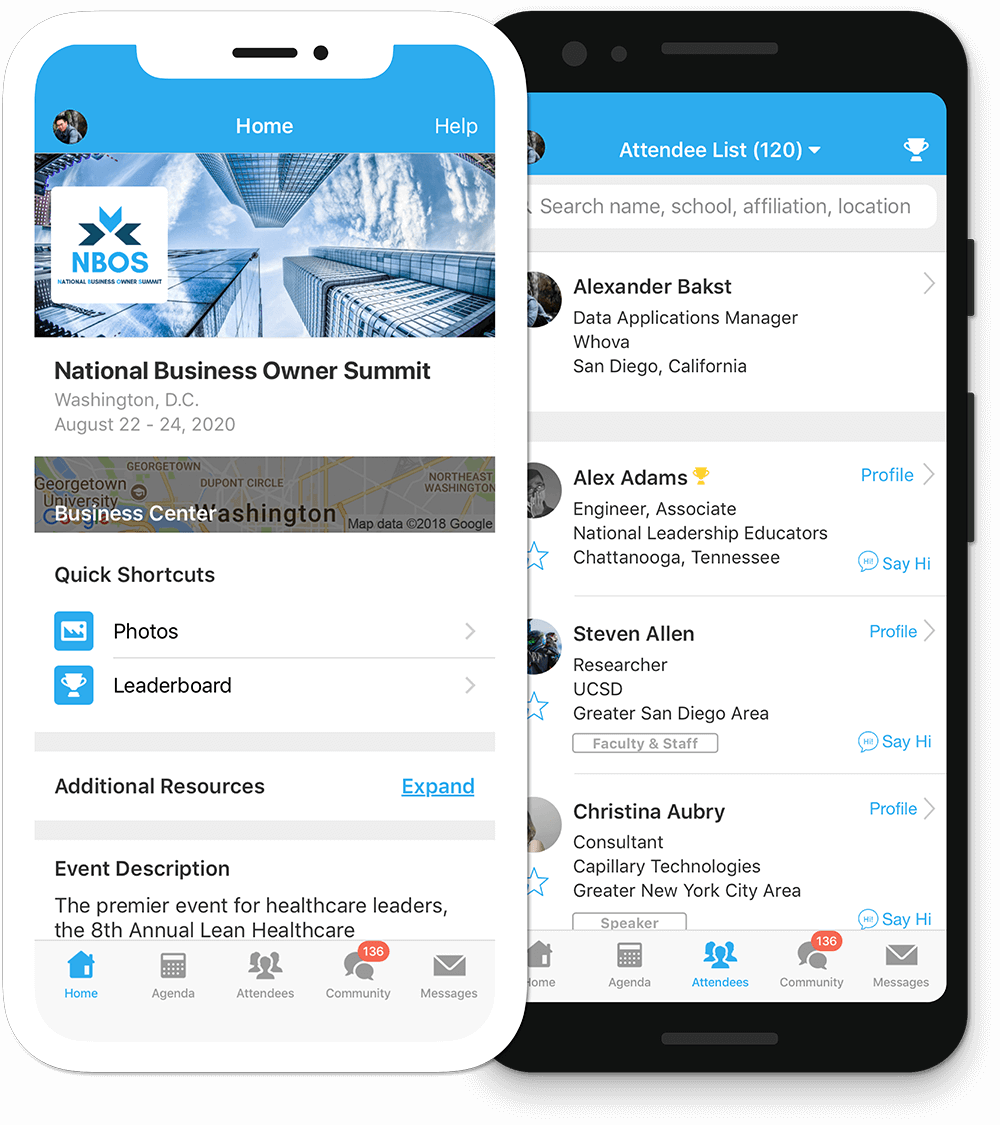
Get the most out of the app and have a more productive experience!
1
NAVIGATE the event agenda and logistics, even without Wi-Fi or data. Access useful information like ridesharing and local attractions through the Community Board
2
NETWORK effectively. Plan whom to meet by exploring attendee profiles and sending out messages
3
PARTICIPATE in event activities through session likes, comments, ratings, live polling, tweeting, and more
All Sessions
Accordion Content
-
Abstract:
This session will provide participants with foundational knowledge about the needs, practices, and diverse perspectives within undocumented communities, while promoting a culture of inclusion and respect. The current political climate and its impacts on college campuses will be included as context to improve understanding. Faculty and staff from all units will benefit from the opportunity to hear about the real lived experiences of undocumented people and develop concrete advocacy efforts. Rutgers-specific resources will also be spotlighted.
Session Type:
Upskilling Session
Lead Facilitator:
Paolo Miyashiro Bedoya, Career Exploration & Success
-
Abstract:
As generative AI tools reshape higher ed, students already use them, raising questions about ethics and academic integrity. This session, aligned with Rutgers' AMP Student Success Pillar, explores how to guide faculty and students toward fair, transparent, and inclusive AI use. Through real cases, participants will reframe integrity as a foundation for innovation and develop strategies to promote trust and AI literacy across the Rutgers community.
Session Type:
Discussion Session
Lead Facilitator:
Hayet Bensetti Benbader, Douglass Residential College
-
Abstract:
This session shares how the Aresty Research Center’s reimagined summer programming promotes belonging among high-achieving undergraduate researchers. Through structured social events, mentorship engagement, and community-building activities, the program fosters joy and resilience beyond the lab. Humanizing our program helps students thrive academically and emotionally within high-stress research environments.
Session Type:
Success Story
Lead Facilitator:
Tamiah Brevard-Rodriguez, Aresty Undergraduate Research
Co-Facilitators:
Candice Haigler , Aresty Research Center
Chandni Pathak, Aresty Research Center
Jenna Costantino, Aresty Research Center
Eric Gawiser, Aresty Research Center
-
Abstract:
Students are using ChatGPT to learn in college, regardless of the course AI policy. In this interactive session, a panel of teaching faculty across disciplines will share innovative strategies and challenges encountered to create a meaningful learning experience in the higher ed classroom. The panel will further engage with the audience to explore implementable, scalable approaches to incorporating transferable professional skills into content instruction to prepare students for a future with AI as a potential workplace partner.
Session Type:
Discussion Session
Lead Facilitator:
Jenny Yang, Rutgers, The State University of New Jersey
Co-Facilitators:
David Goldman, SAS Office of Undergraduate Education
Anita Franzione, Bloustein School of Planning and Public Policy
Elif Sendur, Writing Program
Lyra Stein, Psychology
Michael Woodbury, Mathematics
-
Abstract:
University-based health systems provide effective physical and mental health care; however, these concerns are often interrelated. When these concerns are treated separately, the interrelated complexity can be overlooked creating missed opportunities to improve students’ holistic health. By integrating behavioral health providers into on-campus student health centers, more comprehensive and efficient interventions can occur while providing an alternate pathway to mental health services for students who may not have accessed them otherwise.
Session Type:
Success Story
Lead Facilitator:
Sabrina Starkman, RSH CAPS
Co-Facilitators:
Steven Sohnle, RSH CAPS
Claudia Nuss, RSH CAPS
-
Abstract:
ScarletWell Connection Grants empower Rutgers-NB students, staff, and faculty to design small-scale wellness initiatives that foster belonging, leadership, and collaboration across campus. This panel presentation comprised of student grant recipients highlights student success outcomes, including increased cross-unit engagement, delivery of wellness activities across campus, and the development of a Wellness Champion digital badge. Participants will learn how-to strategies for this low-cost, high-impact model to support student success and camp
Session Type:
Success Story
Lead Facilitator:
Amy Spagnolo, Academic Affairs
Co-Facilitators:
Josh Langberg, Chancellor's Office, GSAPP, & CYSEW
Margaret (Peggy) Swarbrick, ScarletWell, GSAPP, and CAS
Student Panelists Names TBD, ScarletWell
-
Abstract:
Student success depends on the actions of students and on the conditions created in the university’s academic, advising, housing, mealtime, leisure, and other spaces. Recent research suggests that students’ recognition of their sense of dignity and purpose—and that of others they encounter on campus—strongly influences success. Learn how to use the Dignity Index, the Dignity Derailers, and the Language of Positive Purpose in your interactions with students.
Session Type:
Upskilling Session
Lead Facilitator:
Maurice Elias, Psychology
-
Abstract:
This study was designed to understand how food and financial insecurity exacerbate the challenges parenting graduate students (PGSs) face. Informed by the ecological model (Bronfenbrenner, 1979), semi-structured in-depth interviews were conducted with seven PGSs who experienced food insecurity while enrolled. Findings revealed that food and financial insecurity had a negative impact on the academic experiences and mental health of PGSs. To mitigate these difficulties, PGSs created informal communities of support to navigate higher education.
Session Type:
Research Spotlight
Lead Facilitator:
Stephanie Brescia, Education Psychology
Co-Facilitator:
Anika Sullivan , Temple University
-
Abstract:
Large-scale academic programs often face tension between efficiency, equity, and human connection. Grounded in the ongoing efforts of the Learning Assistant Program—and informed by theory on belonging, empathy, and organizational design—this session invites participants to reimagine structure as a vehicle for care. Through collaborative dialogue and shared examples, we’ll explore practical ways to align institutional goals with human-centered student support.
Session Type:
Discussion Session
Lead Facilitator:
Tasha Coleman, Learning Centers
Co-Facilitator:
Olivia Maikisch, Learning Centers
-
Abstract:
Scarlet Pitch is Rutgers’ university-wide innovation competition that helps students turn ideas into action through design thinking and evidence-based entrepreneurship. Led by IDEA (Innovation, Design and Entrepreurership Academy), the Provost’s Office, and Rutgers partners, it advances high-impact learning, cross-disciplinary collaboration, and career readiness. Scarlet Pitch also links applicants to the UPitchNJ competition (statewide, sponsored by Nokia Bell Labs) and the Hult Prize competition (international, UN SDG-aligned).
Session Type:
Success Story
Lead Facilitator:
Connie Pascal, Library & Information Science
Co-Facilitators:
Veronica Armour, Undergraduate Education
Lori Dars, SEBS
Chloe Tirino, Student
-
Abstract:
This Research Spotlight shares findings from a qualitative study exploring how Black women in engineering navigate belonging and persistence within a historically white institution. Grounded in Black Feminist Theory and Sista Circle Methodology, the study offers transferable insights for creating affirming learning environments across disciplines. Attendees will learn strategies to strengthen belonging, mentorship, and equity for underrepresented students in any academic or co-curricular context.
Session Type:
Research Spotlight
Lead Facilitator:
Dr. Shareyna James, Rutgers Future Scholars
-
Abstract:
The IFF Fellows Program supports Rutgers undergraduates who have experienced foster care or homelessness through supportive coaching, community building, and fostering strong campus partnerships. This session will offer practical strategies to strengthen student engagement, retention, graduation, and cross-campus collaboration--highlighting the power of coordinated support amongst student-facing units across the university while connecting the Fellows model to Rutgers’ Academic Master Plan goals of equity and inclusion.
Session Type:
Success Story
Lead Facilitator:
Adam Staats, Institute for Families (IFF), School of Social Work
Co-Facilitator:
Melissa Shermer, Institute for Families (IFF), School of Social Work
-
Abstract:
Explore ways to collaborate with Rutgers Cooperative Extension to support student success. This interactive session, led by faculty within the Department of Family and Community Health Sciences, will highlight best practices for mentoring, inclusive outreach, and experiential learning. Participants will reflect on their own practices and leave with strategies to build student pathways that center equity, collaboration, and real-world impact.
Session Type:
Upskilling Session
Lead Facilitator:
Ricardo Kairios, Family and Community Health Sciences
Co-Facilitators:
Veronica Jones, Family and Community Health Sciences
Jennifer Taylor, Family and Community Health Sciences
-
Abstract:
Drawing on data from the Fall 2022 Rutgers Quality of Life survey and student academic records, this session reviews findings from research on the relationship between food security status and academic success among first-year undergraduate students across the four RU campuses. The focus will be on academic outcomes related to on-time graduation, including credit accumulation and retention. Participants will also have the opportunity to reflect on these findings and brainstorm implications for their practice through a guided discussion.
Session Type:
Research Spotlight
Lead Facilitator:
Kelly Dietz, Enrollment Management Analytics
-
Abstract:
The ubiquity of AI may present obstacles to student learning. What can we do to help learners increase the cognitive awareness needed to navigate this new learning environment successfully? This session presents intentional formative assessment and metacognitive development strategies that have stood the test of time. Participants will explore ways we can create environments and resources that support metacognitive development from both the course design and student learning support standpoints.
Session Type:
Upskilling Session
Lead Facilitator:
Pauline Carpenter, SAS Office of Undergraduate Education
Co-Facilitator:
Rebecca Clapp, The Learning Centers
-
Abstract:
This session empowers leaders of student support staff to cultivate inclusive, reflective, and intentional management practices that foster team well-being and student success. Participants will explore how mindfulness, equity, and emotional intelligence can shape their leadership style and workplace culture. The session includes a self-assessment quiz, a leadership reflection checklist, and practical strategies for implementation.
Session Type:
Upskilling Session
Lead Facilitator:
Krista Klein, Honors College
Co-Facilitator:
Musu Davis, SAS
-
Abstract:
This interactive session explores how to foster belonging and sustainability for LGBTQIA2S+ students in higher education. Using research, lived experience, and examples from Rutgers University–New Brunswick, participants will apply mutual aid and a love ethic to evaluate resources and strengthen advocacy networks. Attendees will leave with actionable strategies to enhance support and create thriving environments for queer and trans students.
Session Type:
Upskilling Session
Lead Facilitator:
Keywuan Caulk, Center for Social Justice Education & LGBT Communities
Co-Facilitator:
Paolo Miyashiro Bedoya, Career Exploration and Success
-
Abstract:
Weekly Learning Journals foster metacognition by helping students reflect on what resonated, surprised, and challenged them each week. Since 2017, this practice has deepened engagement, sustained learning continuity, and offered real-time feedback on teaching effectiveness. This session explores how structured reflection cultivates self-regulated learners and provides practical strategies for integrating journals into courses.
Participants will leave with practical templates, sample prompts, and strategies for integrating reflective journals.
Session Type:
Success Story
Lead Facilitator:
Raymond Dool, Communication
-
Abstract:
This interactive workshop introduces mindfulness as a practical, research-informed tool for enhancing student wellbeing, engagement, and belonging. Designed for both faculty and student support professionals, the session explores how brief, accessible mindfulness practices can be integrated into classrooms, advising, and co-curricular spaces. Drawing on current research and the presenters’ experience in mindfulness-based education, participants will engage in experiential exercises and leave with strategies that foster learning and belonging.
Session Type:
Upskilling Session
Lead Facilitator:
Andrea Sarko, Douglass Residential College
-
Abstract:
Take a deep dive with us into stratified random sample surveys (StRS) with case studies and a live demo—showing why practitioners shouldn’t fear data while learning how to collect representative insights on a budget. This session is intentionally accessible and interactive; we use plain language, visual examples, and real-life scenarios. Join us as we demonstrate that high-quality data is achievable in any office setting. Participants will leave with the confidence and tools to design StRS, interpret results, and make data informed decisions.
Session Type:
Upskilling Session
Lead Facilitator:
Ruth Ann Phillippi, Career Exploration & Success
Co-Facilitator:
William Jones, Career Exploration & Success
-
Abstract:
In this session, participants will learn about best practices for preparing students to enter their communities for both curricular and co-curricular experiences. Additionally, an overview and tutorial of the RCommunity (Give Pulse) platform will be presented. Finally, participants will engage in collaborative discussions about the community-engaged student experience at Rutgers. Participants will walk away with tangible skills for mentoring students and technical knowledge about a useful platform for enhancing community-engaged experiences.
Session Type:
Upskilling Session
Lead Facilitator:
Abby Ra[isardi, Collaborative Center for Community Engagement
-
Abstract:
This session examines how the current media environment impacts students’ attention, motivation, and learning. The goals of this presentation are to: 1) explore the cognitive and emotional effects of constant connectivity; 2) examine how information overload and screentime shape students’ academic behaviors and epistemic engagement; and 3) share strategies from Disinformation Detox in Communication, Media and Information Studies (04:189:210) to support academic success and promote digital wellness.
Session Type:
Discussion Session
Lead Facilitator:
Gina Marcello, Journalism & Media Studies
-
Abstract:
How can we define student success for graduate students beyond degree completion? This session showcases the Graduate Student Career Pathways initiative at Rutgers–New Brunswick, which reimagines success through equity-driven, data-informed, and collaborative strategies. Grounded in the Academic Master Plan Student Success Pillar, the program integrates mentorship, career readiness, and belonging to prepare master’s and doctoral students for diverse professional futures.
Session Type:
Success Story
Lead Facilitator:
Rudrani Gangopadhyay, Career Exploration & Success
-
Abstract:
Learn about Scarlet Skills, a new Learning Centers initiative, and how you can engage students’ mindset, metacognition, and memory more effectively.
This interactive session introduces faculty and staff to the Scarlet Skills framework of the 3M’s adapted from Learning at Iowa: mindset, metacognition, and memory. Participants will practice using tools from the initiative, explore engagement opportunities through the Learning Centers, and discuss strategies to help students apply effective learning practices in courses and programs.
Session Type:
Upskilling Session
Lead Facilitator:
Lucille Leung, Learning Centers
Co-Facilitators:
Mackenzie Barry, Learning Centers
Sarah Kravits, Learning Centers
Lissette Morales, Learning Centers
-
Abstract:
Scarlet Arts Rx is a collaboration between MGSA and GSAPP and is supported by the Rutgers – NB Chancellor’s Office. As a program in its 2nd year, we were featured in Inside Higher Ed as a Student Success Story and received a national-level arts innovation honor. Learn how this program, using a replicable model of peer-led arts experiences, has attracted thousands of Rutgers students and produced diverse, welcoming campus collaborations and high outcomes across multiple well-being categories.
Session Type:
Success Story
Lead Facilitator:
Peichi Waite, Mason Gross School of Arts Dea
Co-Facilitators:
Pickle Almosd, MGSA Dean's Office
Rediet Mereke, MGSA Dean's Office
-
Abstract:
Learn practical peer-support and active listening skills you can use to build stronger connections with colleagues, students, and the campus community. This interactive session introduces the Peer Support Leader (PSL) framework, an approach that integrates empathy, reflective listening and responding, and resource navigation. You will practice simple, techniques to enhance communication, connection, and peer engagement across any role or unit. Ultimately, active listening & empathic responding supports colleagues to build resilience.
Session Type:
Upskilling Session
Lead Facilitator:
Amy Spagnolo, Academic Affairs: ScarletWell Chancellor's Inititiative
Co-Facilitators:
Jeff Broggi, Dean of Students
Margaret (Peggy) Swarbrick, ScarletWell, GSAPP, and CAS
Adrienne Simonds, SHP - REHABILITATION & MOVEMENT
Paul Fischbach, RECREATION
-
Abstract:
The College Support Program (CSP) at the Rutgers Center for Adult Autism Services (RCAAS) and Center for Youth Social Emotional Wellness (CYSEW) serves Rutgers students with an Autism Spectrum Disorder (ASD) and/or Attention-Deficit Hyperactivity Disorder diagnoses. We provide students with the skills and strategies that are necessary to achieve success in an academic environment. Our upskilling session will review resources to educate university faculty and staff to provide support for students’ education.
Session Type:
Upskilling Session
Lead Facilitator:
Keya Pai, College Support Program, Rutgers Center for Adult Autism Services
-
Abstract:
Discover how The 5 Languages of Appreciation in the Workplace can enhance relationships and student success. Identify your own appreciation language, explore strategies to recognize and communicate appreciation effectively, and examine how intentional appreciation practices can be meaningfully applied to strengthen relationships among faculty, staff, and students. Together, we will make explicit connections between appreciation, workplace culture, and the collective work of enhancing the student experience.
Session Type:
Discussion Session
Lead Facilitator:
Meghan Ingstrup, School of Communication & Information (SC&I) Student Services
-
Abstract:
Fostering belonging is vital to student success—and measuring it requires creativity and empathy. “The Game of Life: College Edition,” developed by Rutgers–New Brunswick graduate students, is a game-based assessment tool that uses real-life scenarios to reflect college experiences. Grounded in Bronfenbrenner’s ecological systems theory and Strayhorn’s sense of belonging framework, the game integrates design-thinking to explore student development.
Session Type:
Discussion Session
Lead Facilitator:
Emily Dolan, Student Centers & Activities, Division of Student Affairs
Co-Facilitators:
Britney Marrugo , Offices of the Dean of Students- Advocacy, Outreach & Support, Division of Student Affairs
Sophia Parra, Student Centers & Activities, Division of Student Affairs
Victoria Sambenedetto , Residence Life, Division of Student Affairs
-
Abstract:
The Path to Belonging is a tabletop roleplay game designed by College Student Affairs graduate students to enhance first-year belonging and identity development. Inspired by Dungeons & Dragons, players learn theory through play, applying reflection and decision-making without realizing they are engaging in learning theory. The session highlights how game design fostered effective teaching practices, assessment literacy, and inclusive, design-thinking approaches to student engagement.
Session Type:
Discussion Session
Lead Facilitator:
Dayna Weintraub, Student Affairs - New Brunswic
Co-Facilitators:
Eboni Edwards, Residence Life
Samantha Jones, Student Centers and Activities
-
Abstract:
This study aims to address two critical research questions: the predictive value of SAT scores on academic achievement at Rutgers and the differential impact of test-optional policies on student subgroups in admissions. We recommend that submitting standardized test scores can substantially enhance the admission prospects for less-advantaged applicants.
Session Type:
Research Spotlight
Lead Facilitator:
Ting Wang, Institutional Research
-
Abstract:
Alternative grading practices have recently been implemented in two courses: Contemporary Issues in Biochemistry and Introductory Biochemistry Lab. Specifications grading in Contemporary Issues in Biochemistry allows students to work at their own pace as the complete assignments that count toward their target grade. Standards-based testing in Introductory Biochemistry Lab relieves the pressure of an end-of-semester practical exam and promotes mistake-driven achievement of course learning goals.
Session Type:
Success Story
Lead Facilitator:
Sharron Crane, Biochemistry & Microbiology
Discussion Sessions
These sessions are designed to be highly interactive, featuring guided discussions on specific topics. They may include elements such as conversation guides, panels, small group activities, and collaborative creation of shared resources to enhance engagement and learning.
Session Descriptions
Accordion Content
-
Abstract:
As generative AI tools reshape higher ed, students already use them, raising questions about ethics and academic integrity. This session, aligned with Rutgers' AMP Student Success Pillar, explores how to guide faculty and students toward fair, transparent, and inclusive AI use. Through real cases, participants will reframe integrity as a foundation for innovation and develop strategies to promote trust and AI literacy across the Rutgers community.
Session Type:
Discussion Session
Lead Facilitator:
Hayet Bensetti Benbader, Douglass Residential College
-
Abstract:
Students are using ChatGPT to learn in college, regardless of the course AI policy. In this interactive session, a panel of teaching faculty across disciplines will share innovative strategies and challenges encountered to create a meaningful learning experience in the higher ed classroom. The panel will further engage with the audience to explore implementable, scalable approaches to incorporating transferable professional skills into content instruction to prepare students for a future with AI as a potential workplace partner.
Session Type:
Discussion Session
Lead Facilitator:
Jenny Yang, Rutgers, The State University of New Jersey
Co-Facilitators:
David Goldman, SAS Office of Undergraduate Education
Anita Franzione, Bloustein School of Planning and Public Policy
Elif Sendur, Writing Program
Lyra Stein, Psychology
Michael Woodbury, Mathematics
-
Abstract:
Large-scale academic programs often face tension between efficiency, equity, and human connection. Grounded in the ongoing efforts of the Learning Assistant Program—and informed by theory on belonging, empathy, and organizational design—this session invites participants to reimagine structure as a vehicle for care. Through collaborative dialogue and shared examples, we’ll explore practical ways to align institutional goals with human-centered student support.
Session Type:
Discussion Session
Lead Facilitator:
Tasha Coleman, Learning Centers
Co-Facilitator:
Olivia Maikisch, Learning Centers
-
Abstract:
This session examines how the current media environment impacts students’ attention, motivation, and learning. The goals of this presentation are to: 1) explore the cognitive and emotional effects of constant connectivity; 2) examine how information overload and screentime shape students’ academic behaviors and epistemic engagement; and 3) share strategies from Disinformation Detox in Communication, Media and Information Studies (04:189:210) to support academic success and promote digital wellness.
Session Type:
Discussion Session
Lead Facilitator:
Gina Marcello, Journalism & Media Studies
-
Abstract:
Discover how The 5 Languages of Appreciation in the Workplace can enhance relationships and student success. Identify your own appreciation language, explore strategies to recognize and communicate appreciation effectively, and examine how intentional appreciation practices can be meaningfully applied to strengthen relationships among faculty, staff, and students. Together, we will make explicit connections between appreciation, workplace culture, and the collective work of enhancing the student experience.
Session Type:
Discussion Session
Lead Facilitator:
Meghan Ingstrup, School of Communication & Information (SC&I) Student Services
-
Abstract:
Fostering belonging is vital to student success—and measuring it requires creativity and empathy. “The Game of Life: College Edition,” developed by Rutgers–New Brunswick graduate students, is a game-based assessment tool that uses real-life scenarios to reflect college experiences. Grounded in Bronfenbrenner’s ecological systems theory and Strayhorn’s sense of belonging framework, the game integrates design-thinking to explore student development.
Session Type:
Discussion Session
Lead Facilitator:
Emily Dolan, Student Centers & Activities, Division of Student Affairs
Co-Facilitators:
Britney Marrugo, Offices of the Dean of Students—Advocacy, Outreach & Support, Division of Student Affairs
Sophia Parra, Student Centers & Activities, Division of Student Affairs
Victoria Sambenedetto, Residence Life, Division of Student Affairs
-
Abstract:
The Path to Belonging is a tabletop roleplay game designed by College Student Affairs graduate students to enhance first-year belonging and identity development. Inspired by Dungeons & Dragons, players learn theory through play, applying reflection and decision-making without realizing they are engaging in learning theory. The session highlights how game design fostered effective teaching practices, assessment literacy, and inclusive, design-thinking approaches to student engagement.
Session Type:
Discussion Session
Lead Facilitator:
Dayna Weintraub, Student Affairs - New Brunswic
Co-Facilitators:
Eboni Edwards, Residence Life
Samantha Jones, Student Centers and Activities
Research Spotlight Sessions
These sessions provide a platform for Rutgers–New Brunswick faculty, staff, and students to share research focused on student success. Presentations should cover the study’s aims, methods, results, and discussion.
Session Descriptions
Accordion Content
-
Abstract:
This study was designed to understand how food and financial insecurity exacerbate the challenges parenting graduate students (PGSs) face. Informed by the ecological model (Bronfenbrenner, 1979), semi-structured in-depth interviews were conducted with seven PGSs who experienced food insecurity while enrolled. Findings revealed that food and financial insecurity had a negative impact on the academic experiences and mental health of PGSs. To mitigate these difficulties, PGSs created informal communities of support to navigate higher education.
Session Type:
Research Spotlight
Lead Facilitator:
Stephanie Brescia, Education Psychology
Co-Facilitator:
Anika Sullivan, Temple University
-
Abstract:
Drawing on data from the Fall 2022 Rutgers Quality of Life survey and student academic records, this session reviews findings from research on the relationship between food security status and academic success among first-year undergraduate students across the four RU campuses. The focus will be on academic outcomes related to on-time graduation, including credit accumulation and retention. Participants will also have the opportunity to reflect on these findings and brainstorm implications for their practice through a guided discussion.
Session Type:
Research Spotlight
Lead Facilitator:
Kelly Dietz, Enrollment Management Analytics
-
Abstract:
This Research Spotlight shares findings from a qualitative study exploring how Black women in engineering navigate belonging and persistence within a historically white institution. Grounded in Black Feminist Theory and Sista Circle Methodology, the study offers transferable insights for creating affirming learning environments across disciplines. Attendees will learn strategies to strengthen belonging, mentorship, and equity for underrepresented students in any academic or co-curricular context.
Session Type:
Research Spotlight
Lead Facilitator:
Dr. Shareyna James, Rutgers Future Scholars
-
Abstract:
This study aims to address two critical research questions: the predictive value of SAT scores on academic achievement at Rutgers and the differential impact of test-optional policies on student subgroups in admissions. We recommend that submitting standardized test scores can substantially enhance the admission prospects for less-advantaged applicants.
Session Type:
Research Spotlight
Lead Facilitator:
Ting Wang, Institutional Research
Success Story Sessions
These sessions highlight programs, strategies, or interventions with proven positive outcomes, focusing on initiatives that can be adapted or replicated to expand their impact.
Descriptions
Accordion Content
-
Abstract:
This session shares how the Aresty Research Center’s reimagined summer programming promotes belonging among high-achieving undergraduate researchers. Through structured social events, mentorship engagement, and community-building activities, the program fosters joy and resilience beyond the lab. Humanizing our program helps students thrive academically and emotionally within high-stress research environments.
Session Type:
Success Story
Lead Facilitator:
Tamiah Brevard-Rodriguez, Aresty Undergraduate Research
Co-Facilitators:
Candice Haigler, Aresty Research Center
Chandni Pathak, Aresty Research Center
Jenna Costantino, Aresty Research Center
Eric Gawiser, Aresty Research Center
-
Abstract:
University-based health systems provide effective physical and mental health care; however, these concerns are often interrelated. When these concerns are treated separately, the interrelated complexity can be overlooked creating missed opportunities to improve students’ holistic health. By integrating behavioral health providers into on-campus student health centers, more comprehensive and efficient interventions can occur while providing an alternate pathway to mental health services for students who may not have accessed them otherwise.
Session Type:
Success Story
Lead Facilitator:
Sabrina Starkman, RSH CAPS
Co-Facilitators:
Steven Sohnle, RSH CAPS
Claudia Nuss, RSH CAPS
-
Abstract:
ScarletWell Connection Grants empower Rutgers-NB students, staff, and faculty to design small-scale wellness initiatives that foster belonging, leadership, and collaboration across campus. This panel presentation comprised of student grant recipients highlights student success outcomes, including increased cross-unit engagement, delivery of wellness activities across campus, and the development of a Wellness Champion digital badge. Participants will learn how-to strategies for this low-cost, high-impact model to support student success and camp
Session Type:
Success Story
Lead Facilitator:
Amy Spagnolo, Academic Affairs
Co-Facilitators:
Josh Langberg, Chancellor's Office, GSAPP, & CYSEW
Margaret (Peggy) Swarbrick, ScarletWell, GSAPP, and CAS
Student Panelists Names TBD, ScarletWell
-
Abstract:
Scarlet Pitch is Rutgers’ university-wide innovation competition that helps students turn ideas into action through design thinking and evidence-based entrepreneurship. Led by IDEA (Innovation, Design and Entrepreurership Academy), the Provost’s Office, and Rutgers partners, it advances high-impact learning, cross-disciplinary collaboration, and career readiness. Scarlet Pitch also links applicants to the UPitchNJ competition (statewide, sponsored by Nokia Bell Labs) and the Hult Prize competition (international, UN SDG-aligned).
Session Type:
Success Story
Lead Facilitator:
Connie Pascal, Library & Information Science
Co-Facilitators:
Veronica Armour, Undergraduate Education
Lori Dars, SEBS
Chloe Tirino, Student
-
Abstract:
The IFF Fellows Program supports Rutgers undergraduates who have experienced foster care or homelessness through supportive coaching, community building, and fostering strong campus partnerships. This session will offer practical strategies to strengthen student engagement, retention, graduation, and cross-campus collaboration--highlighting the power of coordinated support amongst student-facing units across the university while connecting the Fellows model to Rutgers’ Academic Master Plan goals of equity and inclusion.
Session Type:
Success Story
Lead Facilitator:
Adam Staats, Institute for Families (IFF), School of Social Work
Co-Facilitator:
Melissa Shermer, Institute for Families (IFF), School of Social Work
-
Abstract:
Weekly Learning Journals foster metacognition by helping students reflect on what resonated, surprised, and challenged them each week. Since 2017, this practice has deepened engagement, sustained learning continuity, and offered real-time feedback on teaching effectiveness. This session explores how structured reflection cultivates self-regulated learners and provides practical strategies for integrating journals into courses.
Participants will leave with practical templates, sample prompts, and strategies for integrating reflective journals.
Session Type:
Success Story
Lead Facilitator:
Raymond Dool, Communication
-
Abstract:
How can we define student success for graduate students beyond degree completion? This session showcases the Graduate Student Career Pathways initiative at Rutgers–New Brunswick, which reimagines success through equity-driven, data-informed, and collaborative strategies. Grounded in the Academic Master Plan Student Success Pillar, the program integrates mentorship, career readiness, and belonging to prepare master’s and doctoral students for diverse professional futures.
Session Type:
Success Story
Lead Facilitator:
Rudrani Gangopadhyay, Career Exploration & Success
-
Abstract:
Scarlet Arts Rx is a collaboration between MGSA and GSAPP and is supported by the Rutgers – NB Chancellor’s Office. As a program in its 2nd year, we were featured in Inside Higher Ed as a Student Success Story and received a national-level arts innovation honor. Learn how this program, using a replicable model of peer-led arts experiences, has attracted thousands of Rutgers students and produced diverse, welcoming campus collaborations and high outcomes across multiple well-being categories.
Session Type:
Success Story
Lead Facilitator:
Peichi Waite, Mason Gross School of Arts Dea
Co-Facilitators:
Pickle Almosd, MGSA Dean's Office
Rediet Mereke, MGSA Dean's Office
-
Abstract:
Alternative grading practices have recently been implemented in two courses: Contemporary Issues in Biochemistry and Introductory Biochemistry Lab. Specifications grading in Contemporary Issues in Biochemistry allows students to work at their own pace as the complete assignments that count toward their target grade. Standards-based testing in Introductory Biochemistry Lab relieves the pressure of an end-of-semester practical exam and promotes mistake-driven achievement of course learning goals.
Session Type:
Success Story
Lead Facilitator:
Sharron Crane, Biochemistry & Microbiology
Upskilling Sessions
These interactive sessions teach skills, strategies, or concepts to enhance student success work, with clear objectives to ensure participants can apply what they learn.
Upskilling Session Descriptions
Accordion Content
-
Abstract:
This session will provide participants with foundational knowledge about the needs, practices, and diverse perspectives within undocumented communities, while promoting a culture of inclusion and respect. The current political climate and its impacts on college campuses will be included as context to improve understanding. Faculty and staff from all units will benefit from the opportunity to hear about the real lived experiences of undocumented people and develop concrete advocacy efforts. Rutgers-specific resources will also be spotlighted.
Session Type:
Upskilling Session
Lead Facilitator:
Paolo Miyashiro Bedoya, Career Exploration & Success
-
Abstract:
Student success depends on the actions of students and on the conditions created in the university’s academic, advising, housing, mealtime, leisure, and other spaces. Recent research suggests that students’ recognition of their sense of dignity and purpose—and that of others they encounter on campus—strongly influences success. Learn how to use the Dignity Index, the Dignity Derailers, and the Language of Positive Purpose in your interactions with students.
Session Type:
Upskilling Session
Lead Facilitator:
Maurice Elias, Psychology
-
Abstract:
Explore ways to collaborate with Rutgers Cooperative Extension to support student success. This interactive session, led by faculty within the Department of Family and Community Health Sciences, will highlight best practices for mentoring, inclusive outreach, and experiential learning. Participants will reflect on their own practices and leave with strategies to build student pathways that center equity, collaboration, and real-world impact.
Session Type:
Upskilling Session
Lead Facilitator:
Ricardo Kairios, Family & Community Health Sciences
Co-Facilitators:
Veronica Jones, Family & Community Health Sciences
Jennifer Taylor, Family & Community Health Sciences
-
Abstract:
The ubiquity of AI may present obstacles to student learning. What can we do to help learners increase the cognitive awareness needed to navigate this new learning environment successfully? This session presents intentional formative assessment and metacognitive development strategies that have stood the test of time. Participants will explore ways we can create environments and resources that support metacognitive development from both the course design and student learning support standpoints.
Session Type:
Upskilling Session
Lead Facilitator:
Pauline Carpenter, SAS Office of Undergraduate Education
Co-Facilitator:
Rebecca Clapp, The Learning Centers
-
Abstract:
This session empowers leaders of student support staff to cultivate inclusive, reflective, and intentional management practices that foster team well-being and student success. Participants will explore how mindfulness, equity, and emotional intelligence can shape their leadership style and workplace culture. The session includes a self-assessment quiz, a leadership reflection checklist, and practical strategies for implementation.
Session Type:
Upskilling Session
Lead Facilitator:
Krista Klein, Honors College
Co-Facilitator:
Musu Davis, SAS
-
Abstract:
This interactive session explores how to foster belonging and sustainability for LGBTQIA2S+ students in higher education. Using research, lived experience, and examples from Rutgers University–New Brunswick, participants will apply mutual aid and a love ethic to evaluate resources and strengthen advocacy networks. Attendees will leave with actionable strategies to enhance support and create thriving environments for queer and trans students.
Session Type:
Upskilling Session
Lead Facilitator:
Keywuan Caulk, Center for Social Justice Education & LGBT Communities
Co-Facilitator:
Paolo Miyashiro Bedoya, Career Exploration and Success
-
Abstract:
This interactive workshop introduces mindfulness as a practical, research-informed tool for enhancing student wellbeing, engagement, and belonging. Designed for both faculty and student support professionals, the session explores how brief, accessible mindfulness practices can be integrated into classrooms, advising, and co-curricular spaces. Drawing on current research and the presenters’ experience in mindfulness-based education, participants will engage in experiential exercises and leave with strategies that foster learning and belonging.
Session Type:
Upskilling Session
Lead Facilitator:
Andrea Sarko, Douglass Residential College
-
Abstract:
Take a deep dive with us into stratified random sample surveys (StRS) with case studies and a live demo—showing why practitioners shouldn’t fear data while learning how to collect representative insights on a budget. This session is intentionally accessible and interactive; we use plain language, visual examples, and real-life scenarios. Join us as we demonstrate that high-quality data is achievable in any office setting. Participants will leave with the confidence and tools to design StRS, interpret results, and make data informed decisions.
Session Type:
Upskilling Session
Lead Facilitator:
Ruth Ann Phillippi, Career Exploration & Success
Co-Facilitator:
William Jones, Career Exploration & Success
-
Abstract:
In this session, participants will learn about best practices for preparing students to enter their communities for both curricular and co-curricular experiences. Additionally, an overview and tutorial of the RCommunity (Give Pulse) platform will be presented. Finally, participants will engage in collaborative discussions about the community-engaged student experience at Rutgers. Participants will walk away with tangible skills for mentoring students and technical knowledge about a useful platform for enhancing community-engaged experiences.
Session Type:
Upskilling Session
Lead Facilitator:
Abby Ra[isardi, Collaborative Center for Community Engagement
-
Abstract:
Learn about Scarlet Skills, a new Learning Centers initiative, and how you can engage students’ mindset, metacognition, and memory more effectively.
This interactive session introduces faculty and staff to the Scarlet Skills framework of the 3M’s adapted from Learning at Iowa: mindset, metacognition, and memory. Participants will practice using tools from the initiative, explore engagement opportunities through the Learning Centers, and discuss strategies to help students apply effective learning practices in courses and programs.
Session Type:
Upskilling Session
Lead Facilitator:
Lucille Leung, Learning Centers
Co-Facilitators:
Mackenzie Barry, Learning Centers
Sarah Kravits, Learning Centers
Lissette Morales, Learning Centers
-
Abstract:
Learn practical peer-support and active listening skills you can use to build stronger connections with colleagues, students, and the campus community. This interactive session introduces the Peer Support Leader (PSL) framework, an approach that integrates empathy, reflective listening and responding, and resource navigation. You will practice simple, techniques to enhance communication, connection, and peer engagement across any role or unit. Ultimately, active listening & empathic responding supports colleagues to build resilience.
Session Type:
Upskilling Session
Lead Facilitator:
Amy Spagnolo, Academic Affairs: ScarletWell Chancellor's Inititiative
Co-Facilitators:
Jeff Broggi, Dean of Students
Margaret (Peggy) Swarbrick, ScarletWell, GSAPP, and CAS
Adrienne Simonds, SHP - Rehabilitation & Movement
Paul Fischbach, Recreation
-
Abstract:
The College Support Program (CSP) at the Rutgers Center for Adult Autism Services (RCAAS) and Center for Youth Social Emotional Wellness (CYSEW) serves Rutgers students with an Autism Spectrum Disorder (ASD) and/or Attention-Deficit Hyperactivity Disorder diagnoses. We provide students with the skills and strategies that are necessary to achieve success in an academic environment. Our upskilling session will review resources to educate university faculty and staff to provide support for students’ education.
Session Type:
Upskilling Session
Lead Facilitator:
Keya Pai, College Support Program, Rutgers Center for Adult Autism Services